

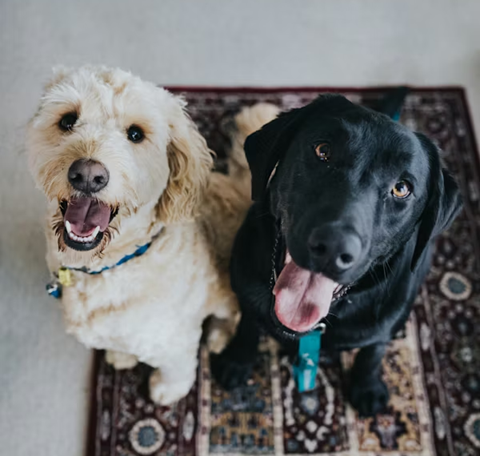
One of the more common questions I hear in multi-dog households is: “How can we help our dogs get along better? “
If the dogs are actually fighting, it will be important that you keep them separated. Fighting becomes a habit that is hard to break. Don’t allow them to practice this. Instead, plan on managing them in a way that they can’t fight. This likely involves some combination of crates, gates and tethers. This mode is often referred to as “crate and rotate”. For cases where there are only certain scenarios that spark a fight (e.g. feeding time), you can potentially focus your management efforts on preventing just those scenarios (e.g. feeding in separate rooms), while building the dogs’ positive feelings toward each other with carefully orchestrated parallel activities, as described below.
Download the pdf of this article here.
Using punishment to improve the relationship between dogs is rarely successful, and can even increase animosity between the dogs. Instead, we want to change how the dogs feel about each other. In other words, I want the sight of the other dog to predict good things instead of tension, competition, or conflict.
Parallel Activities Can Create Good Vibes
One of the very best ways to improve relationships between dogs is through parallel activities with each dog having their own handler. Choose activities that both dogs love. Examples:
- Parallel walks (aka walking side-by-side) with safe space between the dogs
- Car rides (may need to be tethered apart from each other)
- Hiking in nature with some distance between the dogs.
Make the activity extra fun by taking treats along and giving them out lavishly. I want each dog to start thinking “I love when the other dog comes along, because we do fun things and have a great time”.
The key is that the dogs are enjoying something together without direct social pressure. In the beginning, there may need to be distance and management between them. Over time, as their comfort level with each other increases, that gap can shrink.
For dogs who are just getting to know each other, or who only have minor animosity, this can be your focus for building their positive relationship. For dogs who struggle to be near each other without expressing aggression or fear, you’ll need to start with the following exercise, before including parallel activities.
Changing a Dog’s Opinion of Another
For dog’s who are fighting, remember that preventing “rehearsal” of that behavior is job one. Every fight that happens makes future fights more likely. An exercise that is often called the “Look at That” game (developed by Leslie McDevitt) is your best bet for changing the dogs’ feelings about each other. It is based on counterconditioning and desensitization. At its core, the process is pretty simple:
- We keep the dogs at a distance where they can still stay relatively calm
- We pair the presence of the other dog with really high-value food
- We slowly and systematically increase difficulty over time
Use an especially high-value treat, like fresh meat or freeze-dried protein treats. Crunchy treats or regular kibble usually isn’t going to compete well enough with the emotional intensity of these situations.
Step One: Find the Right Starting Distance
The biggest mistake people make is starting too close. You want enough distance that the dogs notice each other, but are not exploding, lunging, freezing hard, or becoming overly fixated. They might look alert or cautious, but they should still be able to think and eat.
If one dog needs more space than the other, always work at the greater distance. Ideally, each dog has their own handler with plenty of treats.
Step Two: Pair the Other Dog with Good Things
The moment each dog notices the other, start feeding. Don’t wait for bad behavior. The appearance of the other dog should immediately predict a delicious treat arriving. That order of events is really important. Feed each dog within a second or two of them noticing the other dog. Then, after a few seconds, the other dog disappears and the food stops.
That pattern becomes:
- Dog appears = good stuff happens
- Dog leaves = good stuff stops
Over time, you start seeing a really important shift. Instead of staring intensely at the other dog, your dog starts looking back at you as if to say: “Hey, where’s my chicken?” That’s exactly what we want.
Gradually Increase Difficulty
Once both dogs can calmly see each other at that distance, you slowly begin making things harder. You might:
- Keep the other dog visible for longer
- Have one dog move; slowly first, as this amps up the difficulty
- Practice simple behaviors nearby
Only after the dogs are staying relaxed at each stage should you begin decreasing distance. The process should feel boring and successful, not dramatic.
Don’t Rush Reintroducing Free Contact
One of the easiest ways to undo progress is moving too fast, especially if the dogs have been fighting. Just because the dogs have had several good sessions does not mean they are ready for unrestricted interaction. Stick with “crate and rotate” until you’re having consistent success with parallel activities in close proximity.
When you do feel ready to reintroduce free contact, do it gradually. Start in areas with plenty of space, like the backyard, as tight quarters can spark a fight. You can also have the dogs dragging light leashes so you have a safe “handle” to use to redirect them if you see any posturing or animosity building. An additional safety measure that I recommend is having a spray deterrent on hand, like Spray Shield, to be prepared to safely break up a fight, should one happen.
A Few Important Things to Remember
- Management is key. Preventing rehearsals of aggression is essential.
- Distance is your friend. Give the dogs whatever space they need to feel good.
- Our focus is on changing emotions, not obedience, in these cases.
If the dogs are too aroused to eat, think, or disengage, you’re too close or moving too quickly. The goal is not simply to suppress aggression. The goal is helping the dogs genuinely feel safer and more comfortable around one another.
Download the pdf here: Helping Dogs in the Same Household Get Along